August 28, 2026
Modern outdoor spaces often combine hard surfaces with living elements to create areas that are both functional and visually inviting. Concrete patios, stone walkways, retaining walls, pools, and outdoor kitchens provide structure, while grass, flowers, shrubs, and groundcovers soften those architectural features. When these materials meet abruptly, the yard can sometimes feel divided rather than connected. Thoughtful transitions can make separate areas appear to belong to one cohesive environment. The goal is not necessarily to hide concrete or other hardscape materials but to surround them with natural elements that create a more comfortable visual balance. Curved planting beds, layered greenery, decorative grasses, and carefully positioned pathways can all help bridge the gap between constructed and natural spaces. With the right approach, even a heavily hardscaped property can feel relaxed, organic, and connected to its surroundings.
Soften Straight Concrete Edges
Straight concrete surfaces provide useful boundaries for patios, walkways, driveways, and entertaining areas, but their rigid lines can sometimes appear harsh beside natural vegetation. One effective approach is to soften those edges with planting beds that gently curve around portions of the hardscape. Instead of ending the concrete directly against a narrow strip of grass, homeowners can introduce flowering plants, shrubs, or groundcovers that create a gradual transition. A thoughtful landscape design can use these curves to make the entire property feel less rigid and more connected. Ornamental grasses are especially useful because their movement can contrast with the solid appearance of concrete. Low-growing plants can also spill slightly toward the edge without creating an obstacle for people walking through the space. The plants should still leave enough room around walking surfaces to prevent overgrowth from becoming a maintenance issue. When hard edges and soft plantings are balanced carefully, concrete features can become integrated parts of the garden rather than isolated structures.
Layer Plants Along Pathways
Walkways are natural places to introduce gradual transitions because they already guide movement between different portions of a property. A path made from concrete, pavers, or stone can be surrounded by plants that vary in height, texture, and density. Lower plants can sit closest to the walking surface, while taller grasses and shrubs can occupy areas farther away. This layered arrangement creates a visual progression instead of an abrupt change from pavement to vegetation. Repeating several plant varieties along the route can also establish continuity between the entrance, patio, pool, and garden areas. Curved pathways can make this transition even more natural by allowing plant beds to follow the same gentle movement. Homeowners should consider mature plant sizes when selecting greenery so the pathway remains accessible as the landscape develops. A carefully planted walkway can therefore function as more than a route through the yard because it can visually connect one outdoor destination to another.
Introduce Groundcovers Between Materials
Groundcovers can fill small spaces where larger plants would be impractical or difficult to maintain. These low-growing plants can soften the boundaries between concrete, stone, gravel, and larger planting beds without overwhelming the surrounding surfaces. Their spreading growth creates a gradual visual transition that can make hardscape materials appear more naturally integrated into the property. Choosing varieties that suit the available sunlight, soil conditions, and moisture levels can improve long-term performance. A professional landscape design approach can also determine where groundcovers should be used without interfering with drainage or pedestrian areas. Different textures can provide subtle contrast while keeping the overall planting scheme cohesive. Some groundcovers can even fill narrow spaces between stepping stones or along the edges of retaining walls. Used thoughtfully, these plants provide a simple way to reduce the visual severity of hard surfaces while adding color and texture.
Connect Spaces With Repeated Plantings
Repetition is one of the easiest ways to create continuity throughout a modern outdoor space. Using the same ornamental grass, shrub, flower, or tree in several areas can make separate zones feel related. For example, plants positioned around a pool can be repeated near an outdoor kitchen or along a nearby walkway. This does not mean every planting area needs to look identical because repeated elements can be combined with different companion plants. The repetition simply gives the eye familiar features to follow as it moves through the property. A landscape design can use these recurring plant forms to connect hardscape areas without making the yard feel overly formal. Repeating colors can create a similar effect, particularly when flowering plants coordinate with furniture, architectural finishes, or decorative accents. Keeping the plant palette intentional can prevent the property from feeling visually fragmented. The result is an outdoor environment where concrete, stone, greenery, and gathering areas appear to work together.
Frame Hardscape With Ornamental Grasses
Ornamental grasses offer an appealing contrast to concrete because their fine blades and flowing forms introduce movement into structured spaces. They can be planted along patios, retaining walls, pool decks, and walkways where their softer appearance helps break up large expanses of hard material. Many varieties also provide visual interest through different heights, colors, and seasonal characteristics. Taller grasses can create a backdrop while shorter varieties can define the edge of a pathway or seating area. Their natural movement in the breeze can make an otherwise stationary space feel more dynamic. A professional landscape design strategy can position grasses where they soften views without blocking important sightlines or access points. Homeowners should also account for mature width and maintenance requirements before placing them close to paved surfaces. When used in the right locations, ornamental grasses can provide a graceful middle ground between architectural features and surrounding vegetation.
Blend Concrete With Natural Stone
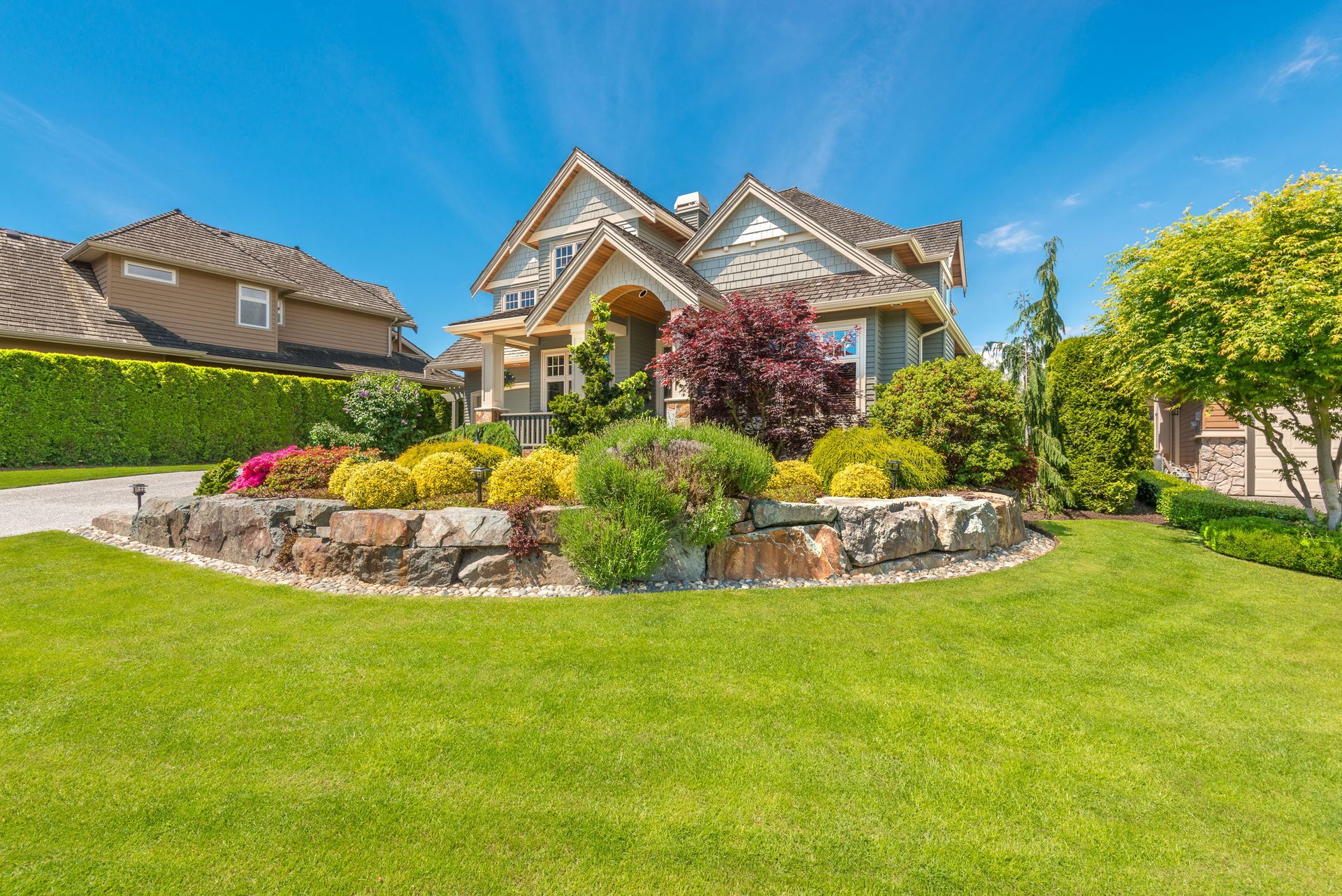
Combining concrete with natural stone can create another type of transition between manufactured and organic materials. Stone edging, boulders, gravel, or decorative rock can introduce irregular textures near the clean lines of a concrete patio or walkway. This combination can help prevent a modern space from appearing overly uniform while maintaining a polished appearance. Natural stone can also be incorporated into retaining walls, steps, seating areas, and garden borders to repeat the same material in different parts of the property. The contrast between smooth concrete and textured stone becomes especially attractive when softened by nearby greenery. According to Jobber, more than 70% of landscapers offer design and construction services, showing how these professionals can address both visual planning and the physical development of outdoor spaces. Coordinating materials before installation can help prevent the yard from becoming a collection of unrelated surfaces. When hardscape materials complement one another, plants can be used to bridge the remaining differences and create a more cohesive outdoor setting.
Create Gradual Changes in Elevation
Changes in elevation can provide natural opportunities for combining hardscape and planting areas. A raised patio might transition into a lower garden through a retaining wall, planted slope, steps, or a series of terraces. Rather than treating each level as a separate zone, homeowners can use vegetation to visually connect them. Shrubs and grasses can soften retaining walls, while groundcovers can fill spaces around steps and other structural elements. Curved planting beds can also make elevation changes appear less abrupt by following the natural contours of the property. A landscape design professional can evaluate grading, drainage, access, and planting conditions when developing these transitions. Proper planning is especially important because water can move differently across sloped areas and hard surfaces. By combining functional grading with thoughtful planting, changes in elevation can become attractive features instead of difficult boundaries.
Even small changes, such as adding a curved bed or repeating grasses around a patio, can make a noticeable difference in how the yard feels. Larger projects may benefit from a coordinated plan that considers materials, grading, plant selection, circulation, lighting, and long-term maintenance together. Krefta Outdoor Living & Pools, LLC can help homeowners bring these elements together when creating an outdoor environment designed around their property and lifestyle. Whether the project involves a pool area, patio, planting beds, pathways, or a broader outdoor transformation, professional planning can help the finished space feel connected from one area to the next. Contact us today to begin creating an outdoor space where concrete, greenery, and natural textures transition beautifully into one cohesive landscape.